Where did the term “rice paper” come from?
The term “rice paper” appeared in ship logs and letters of European traders who bought and sold along the silk road during the 18th& 19th centuries. Rice was the most popular crop associated with East Asia, so the white-ish paper found in this part of the world was coined “rice paper”.
What is “rice paper”?
While “rice paper” is a common identifier to refer to white papers from Asian countries, it is misleading and should be avoided; it is considered one of those “sticky” terms. Moreover, papers lumped into this kind of broad category are often made with very different pulp fibers; and rarely with any part of the rice plant! If you like a broad term, say: “Eastern papers”.
We think it’s important to first determine what you are using the paper for, because the unique set of ingredients which makes up the paper can change the effect of ink, paint, or whatever medium used on or with that paper. Moreover, the term not only oversimplifies the varieties of Eastern papers, but it also rings with a culturally insensitive tone.
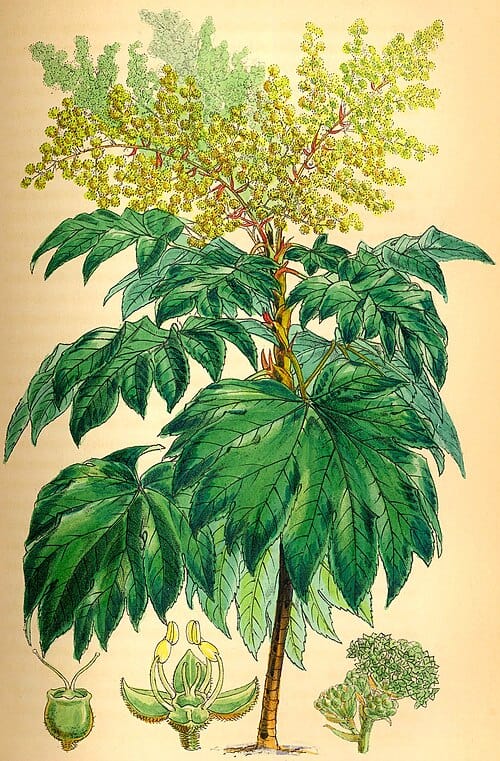
A very important note about the Tetrapanax papyrifer tree: the best common English term for the pith of this special tree is “rice paper” but to be clear this is not paper at all, but a very thin inner peel of the tree’s trunk.

What is “rice paper” actually made from?
The papers that many people think of when they refer to rice paper are, made from the inner bark of the paper mulberry (Broussonetia papyriferathis) which has been cultivated for centuries, and continues to be grown mostly in Japan, Korea and Thailand. Many others are thinking of traditional, usually white, Chinese brush painting paper or xuan paper (pronounced “shwen”, which is made from a blue sandalwood or Pteroceltis tatarinowii.
Please check out our earlier blog post about the term “rice paper” and also a related post about calligraphy paper.
Thank you for reading and allowing us to deconstruct this “sticky” term.