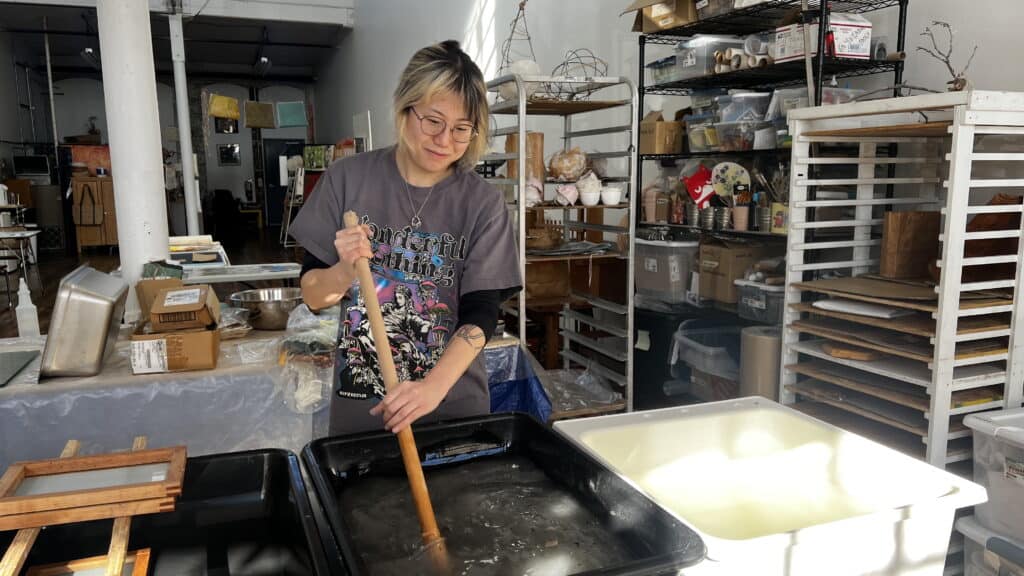
When I heard the soft sounds of water swishing in vats full of kozo, my mind easily conjured the bubbling creeks of Korea. Guided by Justine Chang—a Korean American photographer, papermaker, and employee of Paper Connection—we made over 50 sheets of paper in the span of a month at the Art Annex. The Art Annex is one of Rhode Island’s newest community arts education centers for fiber, paper, and book arts, with professional equipment for hand papermaking. My time in the papermaking studio—as well as with a mentor skilled in the craft—became a vehicle for connection and conversation.
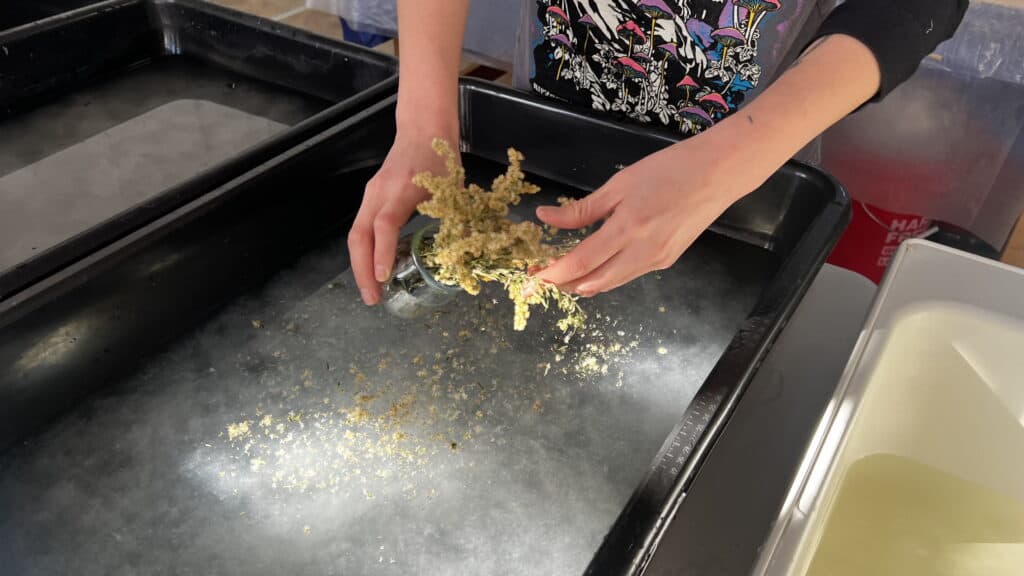
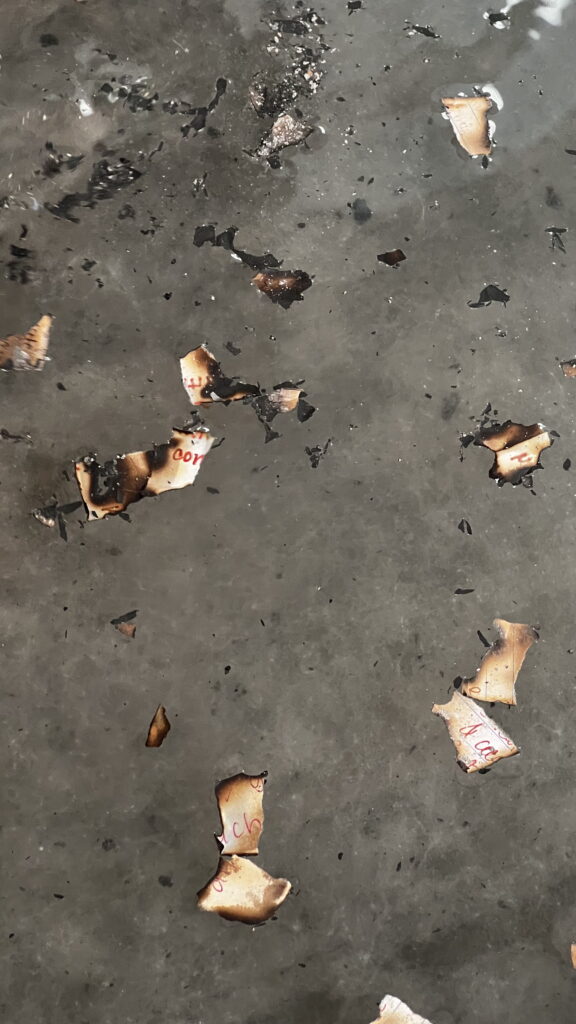
For this project I embedded materials collected from my art practice into the kozo pulp, incorporating traces of the past into the present. With Justine’s guidance we made two vats: the first held paper ashes collected from my manifestation practice and the second contained goldenrod foraged in Providence. We were not certain how the sheets would form with these inclusions. Nonetheless, we looked forward to the experiment.
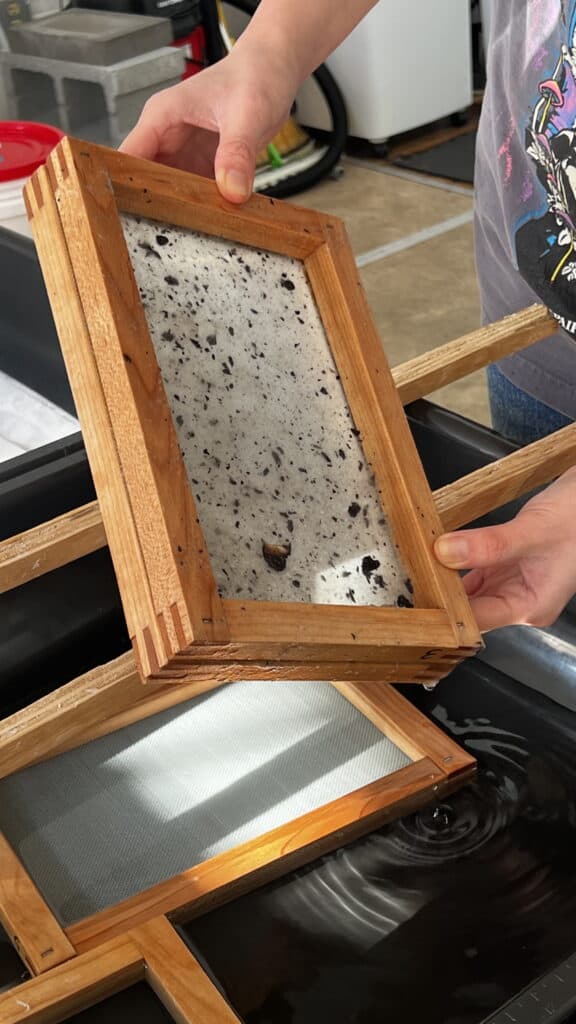
Throughout this languid process, Justine and I had conversations about heritage, craft, and diaspora. Historically, Korea’s society was structured around agriculture. Justine shared that making Korean mulberry paper—hanji—occurred during the winter, a farmer’s off season, and the water used in the process would come from a running river or creek. Our process, on the other hand, was not traditional at all. We used kozo—mulberry pulp, prepared for washi (Japanese paper)—and Western mould and deckles to carefully make our sheets. Justine cracked a joke made by her papermaking mentor Aimee Lee, “If ‘hanji’ means paper made by Koreans, would paper made by Korean Americans be called ‘gyopo-ji’?”
I came across the term “blood memory” through Minneapolis-based artist Candida González. Blood Memory was the title of Candida’s 2024 solo exhibition and refers to the Taino belief that ancestral memories are always present, passed down by blood from generation to generation (Neeganagwedgin 8). In my work I’ve talked about how, during the act of hand sewing, my shoulders ached from generations of women performing this same repetitive motion. I’ve felt blood memory activating while painting minhwa—Korean folk art made by self-trained artists—and once more while making paper with Justine. Embodied sensations told me that those in my bloodline had done this before.
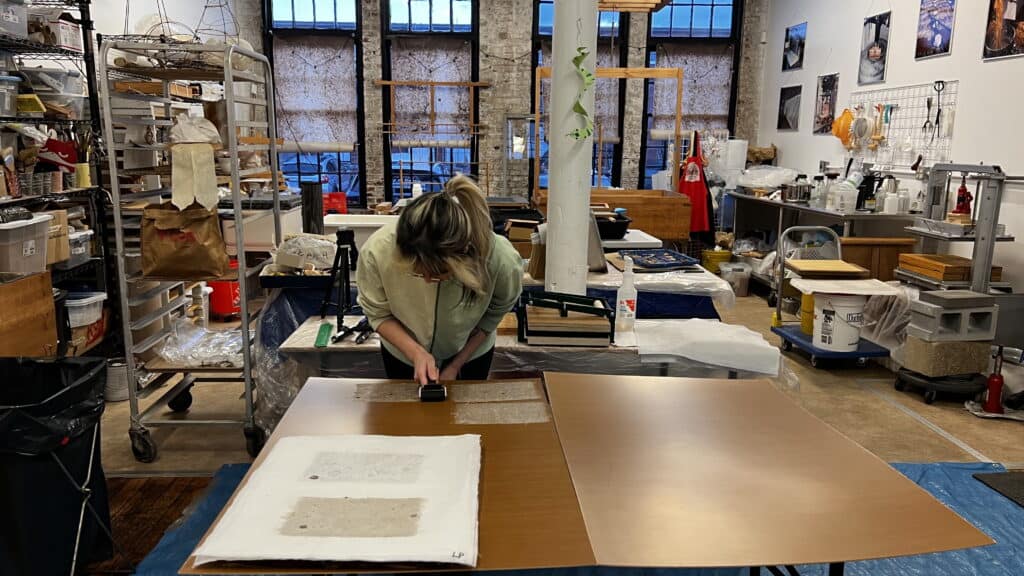
Justine and I pulled sheets, alternating between the vat with manifestation ashes and the vat with foraged marigold. After all of the sheets were couched onto interfacing, Justine used a hydraulic press to remove the excess water, adding more pressure over time. We carefully removed the sheets from the interfacing and laid them flat onto drying boards. After a few days, we returned to peel the sheets from the laminate surface and revelled in the paper we made together.
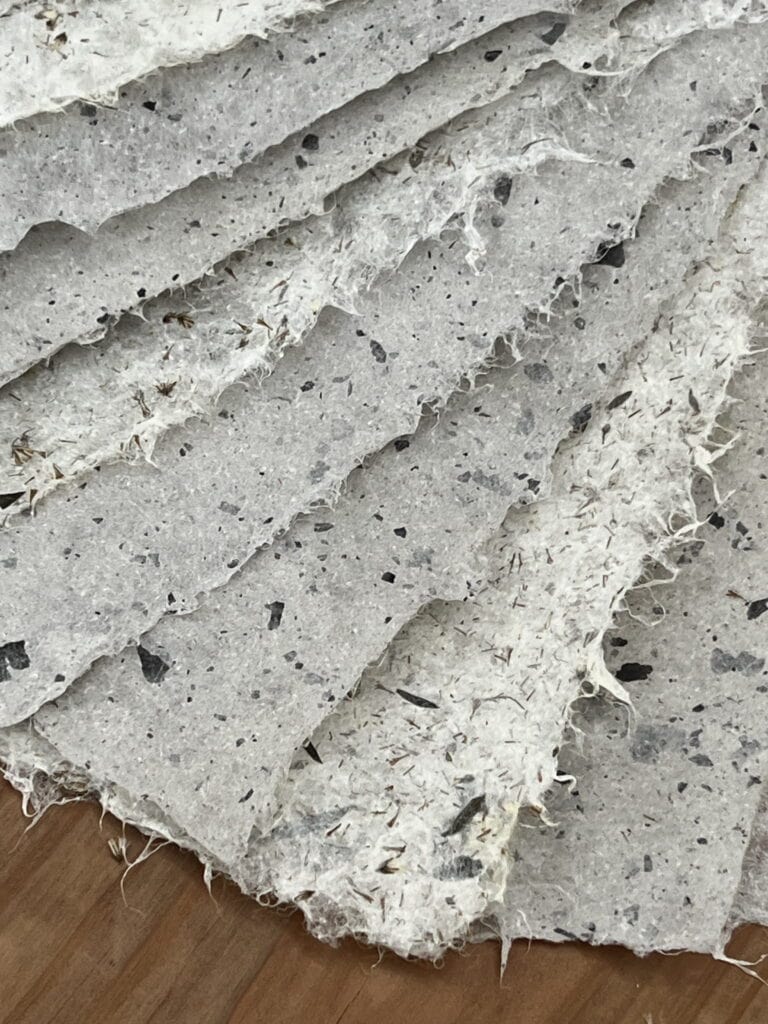
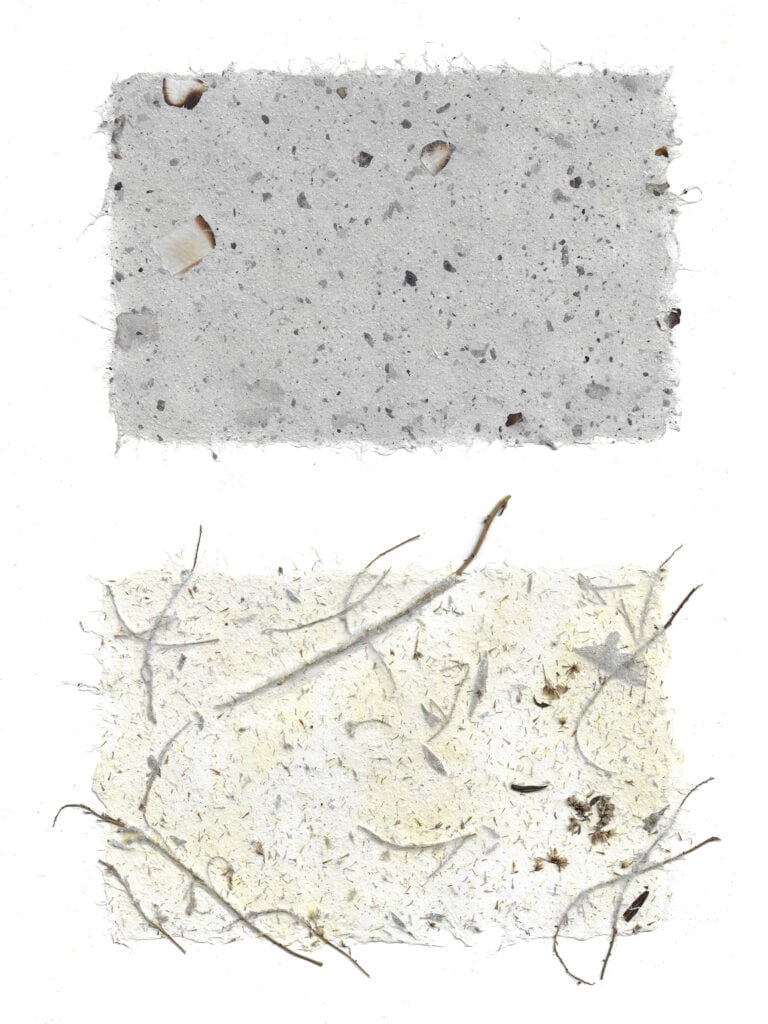
Through this papermaking experiment, I learned about the history of papermaking in Korea and among Korean Americans; created over 50 sheets of kozo paper with special inclusions; and made a new friend, Justine. At the moment, I’m unsure of what to do with this precious material. Some ideas include using it for book binding, writing poetry, or printing text and images. I’ve also used paper in my sewing projects, embroidering into it and attaching it to cloth. This summer, I have the privilege to attend Aimee Lee’s weeklong hanji making retreat in Oberlin, Ohio. I hope this practice continues to strengthen my network of gyopos—diasporic Koreans—who are in conversation with our ancestors and descendents through craft and art.
About The Artist
By honoring skills honed out of scarcity and necessity, I remix heritage craft traditions—such as paj ntaub (Hmong embroidery), bojagi (Korean patchwork quilting), and minhwa (Korean folk painting)—into contemporary art. My work explores themes of ancestry, mental health, folk magic, and resilience through hand-making, allowing the work to accrue layers and transform over time. By conferring with my inner voice, I’m in conversation with myself, my chosen ancestors, and those who call to me from the future. After all, time is not linear.
@ntxoo.art (IG)
Works Cited
Neeganagwedgin, Erica. “Caribbean Indigenous Experiences of Erasure: Movement,Memory and Knowing.” Analecta Política, vol. 12, no. 22, 2022, 8. https://doi.org/10.18566/apolit.v12n22.a01.